 SUTEX | Tube Mill & Roll Forming Manufacturer




SERACH
站内搜索
搜索产品
搜索文章
SERACH
站内搜索
ЦЕНТР ТЕХНОЛОГИЙ
Product characteristics:
Rolls: The principal working components and tools on rolling mills that induce continuous plastic deformation in metal. Rolls primarily comprise three sections: the roll body, roll neck, and shaft end. The roll body constitutes the central portion of the roll directly engaged in metal rolling. It features a smooth cylindrical surface or one with grooves. The roll neck is mounted within bearings and transmits the rolling force to the frame via the bearing housing and the roll pressure device. The drive-end shaft head connects to the gearbox via a coupling shaft, transmitting the motor’s rotational torque to the roll. Rolls may be arranged in two, three, four, or multiple configurations within the mill stand.
1: Cutting: Cut to size according to the drawing specifications and forging ratio
2: Forging: Forged by the forging unit according to the forging ratio (inspected by the forging department)
3: Normalising: After forging, the initial inspection department checks the external dimensions of the roll blank, then it enters the heat treatment workshop for normalising
4: Rough Machining 1: After cooling from normalising, perform ultrasonic testing. Qualified workpieces undergo rough machining on a conventional lathe.
5: Rough Machining 2: Rough-turn R-type cavities on conventional lathes, leaving 15-20mm allowance. Subsequently, machine R-type cavities on CNC lathes, leaving 5-6mm allowance. The company’s initial inspection department inspects the external dimensions of the finished roll blanks.
6: Quenching and Tempering: Proceed to the heat treatment workshop for quenching and tempering, followed by annealing.
7: Finishing: After tempering, machine the internal bore and thickness, outer diameter on a conventional lathe, leaving heat treatment allowance. Then machine the R-type cavity on a CNC lathe, leaving heat treatment allowance.
8: Heat Treatment — Quenching: Select appropriate quenching equipment based on material type. After quenching, choose corresponding tempering equipment based on material type and workpiece size. Determine the number of tempering cycles based on material type and workpiece size. (Note: Rollers made from Cr12MOV, H13, or 9Cr2Mo materials require multiple tempering cycles)
9: Grinding: After tempering and cooling, the company’s initial inspection department conducts hardness testing on the rollers. Upon passing inspection, flat surfaces are machined using a surface grinder, followed by internal bore grinding. Thickness and internal bore dimensions must meet drawing specifications.
10: CNC Machining: The company’s initial inspection department verifies the thickness and bore dimensions of the rollers. Upon passing inspection, CNC machining is performed to create the R-type cavity until the dimensions meet the drawing requirements.
11: Keyway Machining: After inspection, the rollers undergo wire cutting to machine the keyways. (Note: For rollers made of Cr12MoV, H13, or 9Cr2Mo material, heat treatment tempering is mandatory after keyway machining.)
12: Polishing: The company’s precision inspection department verifies thickness, bore diameter, and hardness. The R-type bore profile is checked against a wire-cut roller template. Upon passing inspection, polishing is performed using a combination of mechanical and manual methods.
13: Storage: Coated with hard film rust-preventive oil before warehousing.
14: Packaging: Packaged in wooden crates.
15: Dispatch: Shipped with dispatch details and individual certificate of conformity.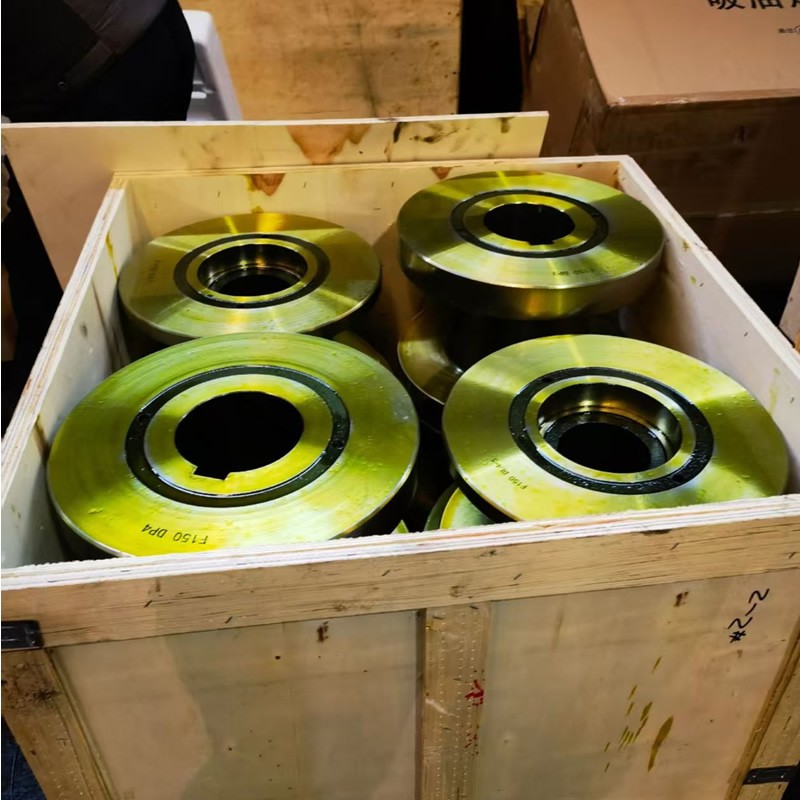
Our company specialises in designing and manufacturing various types of high-frequency welded pipe rolls, cold-formed steel rolls, cold-rolling rolls, levelling rolls, support rolls, straightening rolls, sizing rolls, slitting blades, as well as welding pipe equipment, cold-forming equipment, slitting equipment, cold-rolling equipment, and various other mechanical equipment with supporting auxiliary devices. Our current welding pipe roll specifications cover round pipes from φ5 to φ762, and square pipes from 10mm square to 1000mm square. The company possesses comprehensive and specialised heat treatment facilities.

WATHSAPP

SERVICE HOTLINE:
400-888-1234
CONTACT EMAIL:
LIUYANG@ROLLERKING.NET
ОТПРАВЬТЕ СВОЕ СООБЩЕНИЕ, И МЫ НЕМЕДЛЕННО ОТВЕТИМ!
Хотите заказать оборудование? Отправьте запрос с указанием количества, и мы подготовим для вас лучшее оптовое предложение. Не нашли нужную модель? Напишите нам — мы поможем подобрать или найти подходящий вариант.